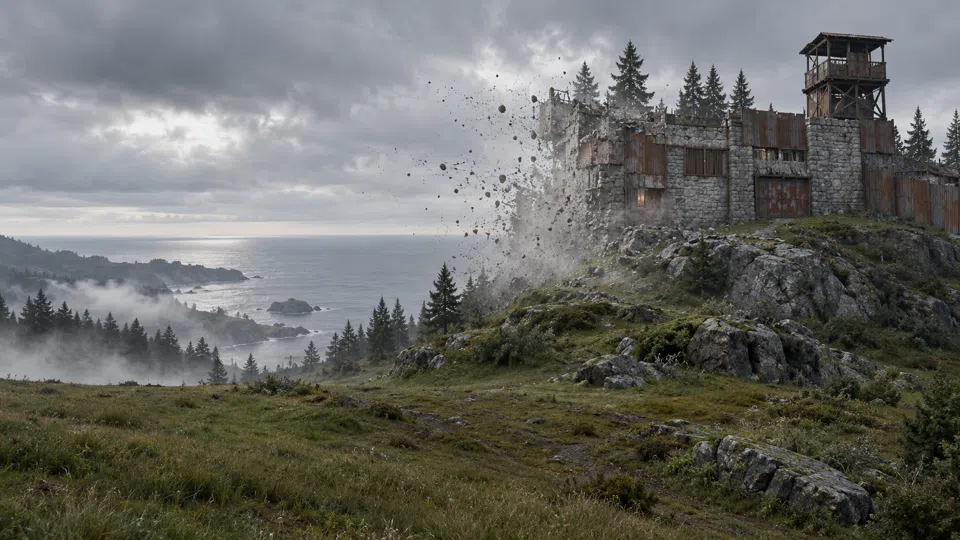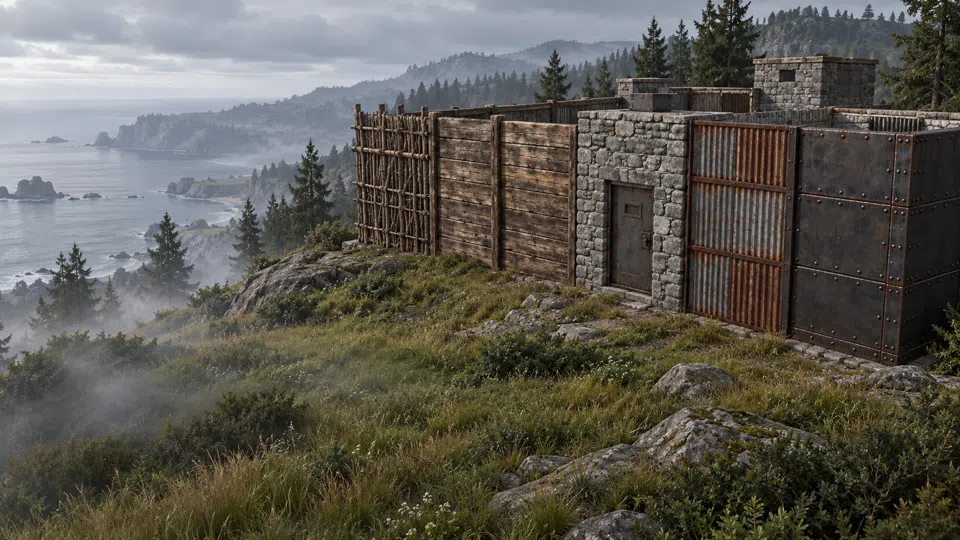
Each grade from wood up doubles the health of the one below. A wood wall has 250 HP, stone 500, sheet metal 1,000 and armored 2,000. Twig, the flimsy grade every piece starts in, has just 10.
Stone is where a base starts to hold. It's the first grade fire can't hurt, and the first that takes two C4 instead of one. Sheet metal and armored add health, not new defences against explosives. So their raid cost climbs exactly in step with their HP.
Every figure here comes from the game's own files. The explosive counts assume a vanilla server, a piece at full health and direct hits from outside.
How much HP does each building grade have?
Good news: you don't have to learn HP piece by piece. A building piece takes its health from its grade alone.
Walls, half and low walls, doorways, window walls, wall frames, floors, foundations, roofs, ramps and stairs all match within a grade. So a stone foundation is a 500 HP target, just like a stone wall.
| Grade | HP | Explosion let through | Fire let through | Bullets let through | Skins, same health |
|---|---|---|---|---|---|
| Twig | 10 | 100% | 50% | 20% | None |
| Wood | 250 | 90% | 10% | 3% | Frontier, Gingerbread |
| Stone | 500 | 50% | None | 1% | Adobe, Brick, Brutalist, Crypt, Jungle |
| Sheet Metal | 1,000 | 50% | None | 0.01% | Shipping Container |
| Armored | 2,000 | 50% | None | 0.01% | Space Station |
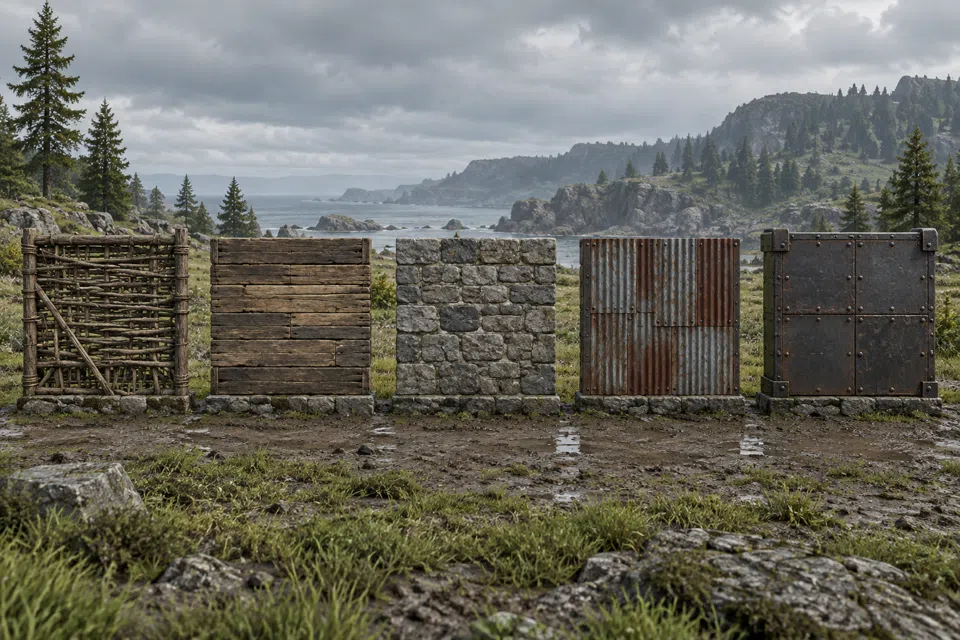
The protection columns show what each grade lets through, before anything else counts. Twig stops none of an explosion. Wood stops a tenth. Stone, sheet metal and armored each stop half.
Fire splits them more cleanly. Twig lets half of it through, wood a tenth, and stone and above none at all.
Skins are just looks. In the game files, every stone skin matches plain stone: 500 HP, same protection. That covers Adobe, Brick, Brutalist, Crypt and Jungle. The two wood skins have wood's 250. The Shipping Container skin has sheet metal's 1,000, and the Space Station skin has armored's 2,000.
To a raider, a brick wall is a stone wall. Pick the look you like.
One more detail hides in the data. Armored uses exactly the same protection as sheet metal. It only has twice the health, which is why every count against it is double the sheet metal count.
What does it cost to upgrade a wall or foundation?
Upgrading is where your farming goes, so know which resource each grade eats. You place pieces with a Building Plan (20 wood). You upgrade them with a Hammer (100 wood), inside the range of your own Tool Cupboard.
Each grade takes its own resource:
- Twig and wood: Wood, the first thing you gather after a wipe (the server reset).
- Stone: Stones, from any stone node.
- Sheet metal: Metal Fragments. You smelt them from metal ore in a furnace.
- Armored: High Quality Metal, the rarest of the four. Armored doors are made of it too.
The per-piece amounts aren't in the game data this site reads, so this page doesn't print them. The game shows you instead. Hold the hammer and open its upgrade wheel on the piece you aim at. It shows the exact cost before you confirm, so trust it over an old chart.
Triangle foundations and floors have the same health as square ones. They hold just as well wherever they fit.
Tip
Upgrade every piece the moment you place it. Twig has 10 HP and takes 20% of bullet damage. A few rifle bullets open a twig wall, and any single explosive does. A base left in twig while you farm isn't a base yet.
How many explosives does each grade take?
This is the number raiders work out before they come for you. From stone up, the math is simple. An explosion loses half its damage on stone, sheet metal and armored, so one C4 takes 275 off any of them.
The count is the health over 275, rounded up: 2 for stone, 4 for sheet metal, 8 for armored.
Wood is different. It lets 90% of an explosion through, so a single C4 (495 damage) breaks a 250 HP wood wall. Three satchels or 49 explosive rounds do it for less sulfur.
Pick a grade to see its health, what it lets through and every common way to break it. The cheapest one is marked.
Compare the grades
Counts are for one wall or foundation. With JavaScript you can count several in a row.
Twig
10 HP
- Upgraded with
- Wood
- Explosion damage let through
- 100%
- Fire damage let through
- 50%
- Skins with the same health
- None
| Explosive | Needed | Sulfur |
|---|---|---|
| C4 | 1 | 2,200 |
| Rockets | 1 | 1,400 |
| Satchel Charges | 1 | 480 |
| Explosive 5.56 | 2 | 50 |
| Beancan Grenades | 1 | 120 |
Cheapest: 2 Explosive 5.56, 50 sulfur.
No sulfur needed: a few rifle bullets or a melee tool break it, and any single explosive does.
Wood
250 HP
- Upgraded with
- Wood
- Explosion damage let through
- 90%
- Fire damage let through
- 10%
- Skins with the same health
- Frontier, Gingerbread
| Explosive | Needed | Sulfur |
|---|---|---|
| C4 | 1 | 2,200 |
| Rockets | 2 | 2,800 |
| Satchel Charges | 3 | 1,440 |
| Explosive 5.56 | 49 | 1,250 |
| Beancan Grenades | 18 | 2,160 |
Cheapest: 49 Explosive 5.56, 1,250 sulfur.
Explosive 5.56 is the cheapest by far; three satchels do it at Workbench Level 1.
Stone
500 HP
- Upgraded with
- Stones
- Explosion damage let through
- 50%
- Fire damage let through
- None
- Skins with the same health
- Adobe, Brick, Brutalist, Crypt, Jungle
| Explosive | Needed | Sulfur |
|---|---|---|
| C4 | 2 | 4,400 |
| Rockets | 4 | 5,600 |
| Satchel Charges | 10 | 4,800 |
| Explosive 5.56 | 185 | 4,650 |
| Beancan Grenades | 64 | 7,680 |
Cheapest: 2 C4, 4,400 sulfur.
Two C4 is the cheapest answer, and the first grade fire cannot hurt.
Sheet Metal
1,000 HP
- Upgraded with
- Metal Fragments
- Explosion damage let through
- 50%
- Fire damage let through
- None
- Skins with the same health
- Shipping Container
| Explosive | Needed | Sulfur |
|---|---|---|
| C4 | 4 | 8,800 |
| Rockets | 8 | 11,200 |
| Satchel Charges | 23 | 11,040 |
| Explosive 5.56 | 400 | 10,000 |
| Beancan Grenades | 131 | 15,720 |
Cheapest: 4 C4, 8,800 sulfur.
Exactly twice stone: double the health, the same explosion protection.
Armored
2,000 HP
- Upgraded with
- High Quality Metal
- Explosion damage let through
- 50%
- Fire damage let through
- None
- Skins with the same health
- Space Station
| Explosive | Needed | Sulfur |
|---|---|---|
| C4 | 8 | 17,600 |
| Rockets | 15 | 21,000 |
| Satchel Charges | 46 | 22,080 |
| Explosive 5.56 | 799 | 20,000 |
| Beancan Grenades | 262 | 31,440 |
Cheapest: 8 C4, 17,600 sulfur.
Exactly twice sheet metal: the same protection, double the health.
From full health, on the outside, every hit landing. Explosive 5.56 counts are for an Assault Rifle from 100 m, a round or a few fewer up close, and are crafted two at a time.
Want the rarer explosives too? Each grade has its own raid page: the wood wall, stone wall, sheet metal wall and armored wall. The raid cost chart explains how the sulfur per explosive is worked out. The raid calculator adds up a whole base for you.
Is sheet metal worth it over stone?
Against explosives, you pay for health and nothing else. One sheet metal wall is exactly two stone walls: four C4 against two, 8,800 sulfur against 4,400. One armored wall is exactly two sheet metal walls: eight C4 and 17,600 sulfur.
All three stop the same half of an explosion. So against C4, the material buys you nothing beyond its health.
Sheet metal pulls ahead against everything that isn't an explosion. Stone lets through 1% of bullet damage, sheet metal 0.01%. Stone lets through 5% of stab damage and 2% of blunt and slash. Sheet metal lets through 2% and 1%.
That gap matters on a wall's soft side, the inner face. The hard outer side cuts melee damage by 90% and bullets by half, on top of the grade's own protection. The soft side gets no such cut.
A stone wall with its soft side reachable is the one players chip through with pickaxes when they have no sulfur. Sheet metal makes that a far longer job.
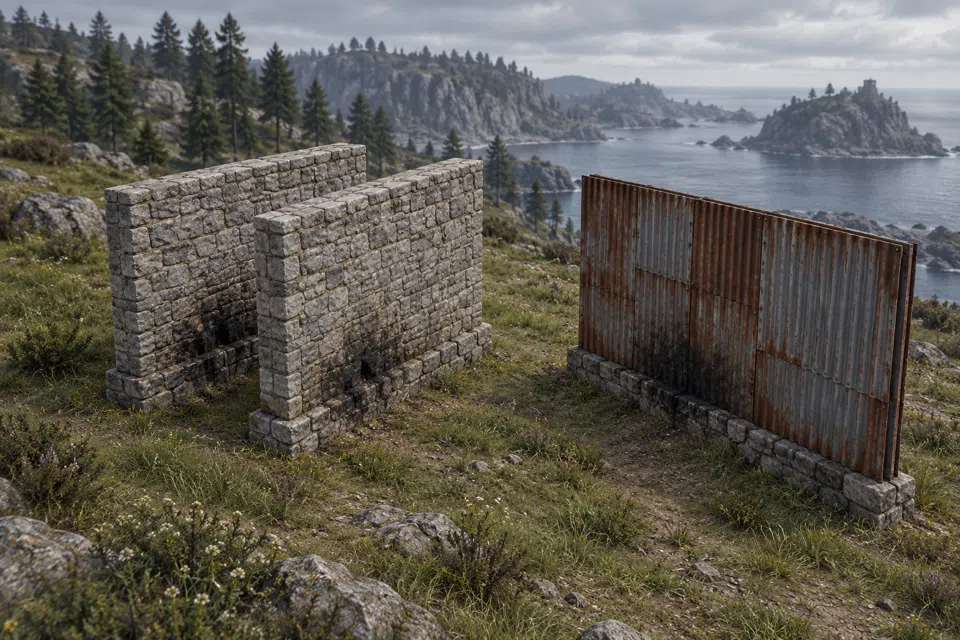
The same math says layers and grades trade one for one. To an explosive, two stone walls in a row are one sheet metal wall. Four stone walls are one armored wall.
So build with whichever resource you have more of. Neither one holds better. Layers have a bonus, though: each one is another breach and more time for you to respond. A raid can run out of charges one wall short.
Set the sulfur a raiding group brings. See how far it gets through each grade, and through the doors next to them.
What a raid's sulfur gets through
The table shows a raid that brings 10,000 sulfur. With JavaScript you can set your own amount.
| Target | Opens | Cheapest way through one |
|---|---|---|
| Wood wall | 8 | 49 Explosive 5.56, 1,250 sulfur |
| Stone wall | 2 | 2 C4, 4,400 sulfur |
| Sheet metal wall | 1 | 4 C4, 8,800 sulfur |
| Armored wall | 0 | 8 C4, 17,600 sulfur |
| Sheet Metal Door | 6 | 63 Explosive 5.56, 1,600 sulfur |
| Armored Door | 1 | 250 Explosive 5.56, 6,250 sulfur |
With 10,000 sulfur: stone walls 2, sheet metal walls 1, armored walls 0.
Each piece is priced on its own with its cheapest explosive, rounded up to whole crafts. A twig wall needs no sulfur at all.
Why is the door the weak point?
Raiders don't pick a fight with your best wall. They take the cheapest way in, and on most bases that's a door.
A Wooden Door has 200 HP. It falls to one rocket or 19 explosive rounds, 500 sulfur. A Sheet Metal Door has 250 HP and takes one C4 or 63 explosive rounds, 1,600 sulfur.
A Garage Door has 600 HP and takes 150 rounds, 3,750 sulfur. An Armored Door has 1,000 HP and takes three C4 or 250 rounds, 6,250 sulfur.
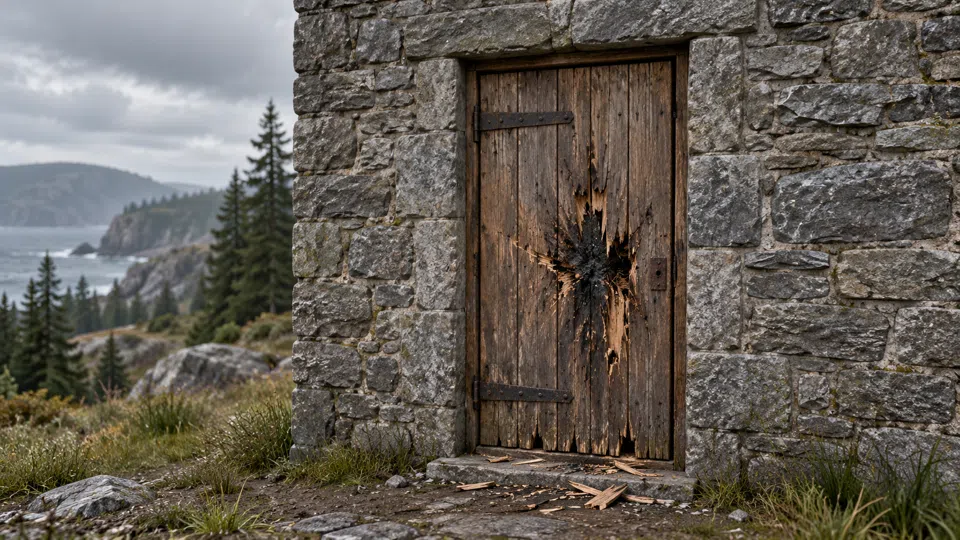
Now compare those with the walls around them. A stone wall costs 4,400 sulfur to breach, and the sheet metal door in it 1,600. Guess which one raiders hit.
Even an armored door, at 6,250, is cheaper than the sheet metal wall it sits in. Upgrading walls past their doors protects nothing.
Watch out
A stone base with a wooden door is a wooden base. Swap the door as soon as you have the fragments. A sheet metal door costs 150 metal fragments and no workbench. It turns a 19-round breach into 63 rounds.
What should you build first in a wipe?
Early in a wipe, what raiders can craft decides what can hurt you. Almost nobody has a Workbench Level 3 yet. C4, rockets and explosive 5.56 are all crafted at Level 3.
Satchel charges and beancan grenades need only a Workbench Level 1, so the first raiders carry those. Against them, the grade matters most. A wood wall falls to 3 satchels, 1,440 sulfur. A stone wall takes 10, 4,800 sulfur.
- Craft a Building Plan and a Hammer. Gather wood first: it builds twig and upgrades it to wood.
- Lay a small footprint in twig. Put a Tool Cupboard (1,000 wood) inside it, then upgrade every piece to wood at once.
- Hang a Wooden Door (300 wood) with a Key Lock (75 wood). Switch to a Code Lock once you have 100 metal fragments.
- Go stone as soon as you have the stones. Start with the walls and foundations around the cupboard and your loot.
- Swap every wooden door for a Sheet Metal Door. Then put sheet metal on the core room around your loot.
- Add layers rather than one thick wall. Save high quality metal for armored on the loot room and for armored doors. Those take 20 high quality metal and 5 gears at Level 3.
Wood is a stopgap, not a grade to stay in. It lets through a fraction of the bullet damage twig does. But fire still gets 10% through it, and three satchels open it. Breaking a wood wall costs raiders under a third of what a stone one does.
FAQ
How much HP does a stone wall have in Rust?
500 HP. Every stone skin, such as brick or adobe, has the same 500. So do stone foundations, floors, doorways and half walls.
How many C4 does a sheet metal wall take?
Four C4, 8,800 sulfur. Eight rockets do it for 11,200, so C4 is the cheaper choice.
Is sheet metal better than stone?
It has twice the health, so it takes twice the explosives. It also lets through far less bullet and melee damage. Against an explosion, though, it stops the same half as stone.
How many rockets does an armored wall take?
15 rockets, 21,000 sulfur. Eight C4 break it for 17,600.
Do building skins change a wall's HP?
No. Every skin has the same health and protection as its grade. Brick and adobe are stone, and the Shipping Container skin is sheet metal.
Can fire destroy a stone wall?
No. Stone, sheet metal and armored let no fire damage through at all. Fire only hurts twig, which lets half through, and wood, which lets a tenth through.